




News & Articles
Browse all content by date.

Author Willy Stern at his Lake Nebagamon home. Photos by Parker Sterling.
“The past and present wilt—
I have fill’d them, emptied them.
And proceed to fill my next fold of the future.”
Walt Whitman, “Song of Myself”
Not unlike a few other of the truly great people I’ve met, I discovered veteran journalist and author Willy Stern wears his mantle lightly and doesn’t take himself too seriously.
Over the course of conversations and emails, I came to realize I was in the presence of a man who, as Whitman so poignantly wrote, ‘contains multitudes.’
Following the success of his oversized book Canot du Nord, a gorgeous collection of 17th and 18th century maps that feature or include “Lac Tracy” (“Lake Superior”), for Shtus and Nonsense Stern focused the lens on a more intimate subject: himself.
And mimetically, Stern chose the size of a pocket/guide book (4 x 6) as his canvas. What began as a gift to family and friends who then sent the book to other family members or who recommended it to other friends (who then requested their own copy), Shtus and Nonsense evolved into an autobiographical book with a wider and evolving audience.
“I’ve been on dozens of helicopter rides as a journalist and never threw up once, inside the bird. Outside, well…”
Willy Stern, Shtus and Nonsense
Stern’s storytelling roots run deep. He says the inspiration for Shtus and Nonsense “came from family. On my mom’s side, I descend from several generations of superb raconteurs. We are storytellers.”
Stern says the love of journalism is “running in [his] veins,” like his profound affection for storytelling.
“I got the scribbling bug in 10th grade. I approached the local newspaper and the next thing you know I was getting paid $10/article to cover high school football and basketball games. I had no idea what I was doing. Forty years later, I am still not entirely sure I know what I am doing! But I first started thinking about journalism as a career when I was working at an investment bank after college. I was miserable in the job,” Stern says and continues, “I wanted to live life, see the world, have adventures not be just another boring yuppie.”
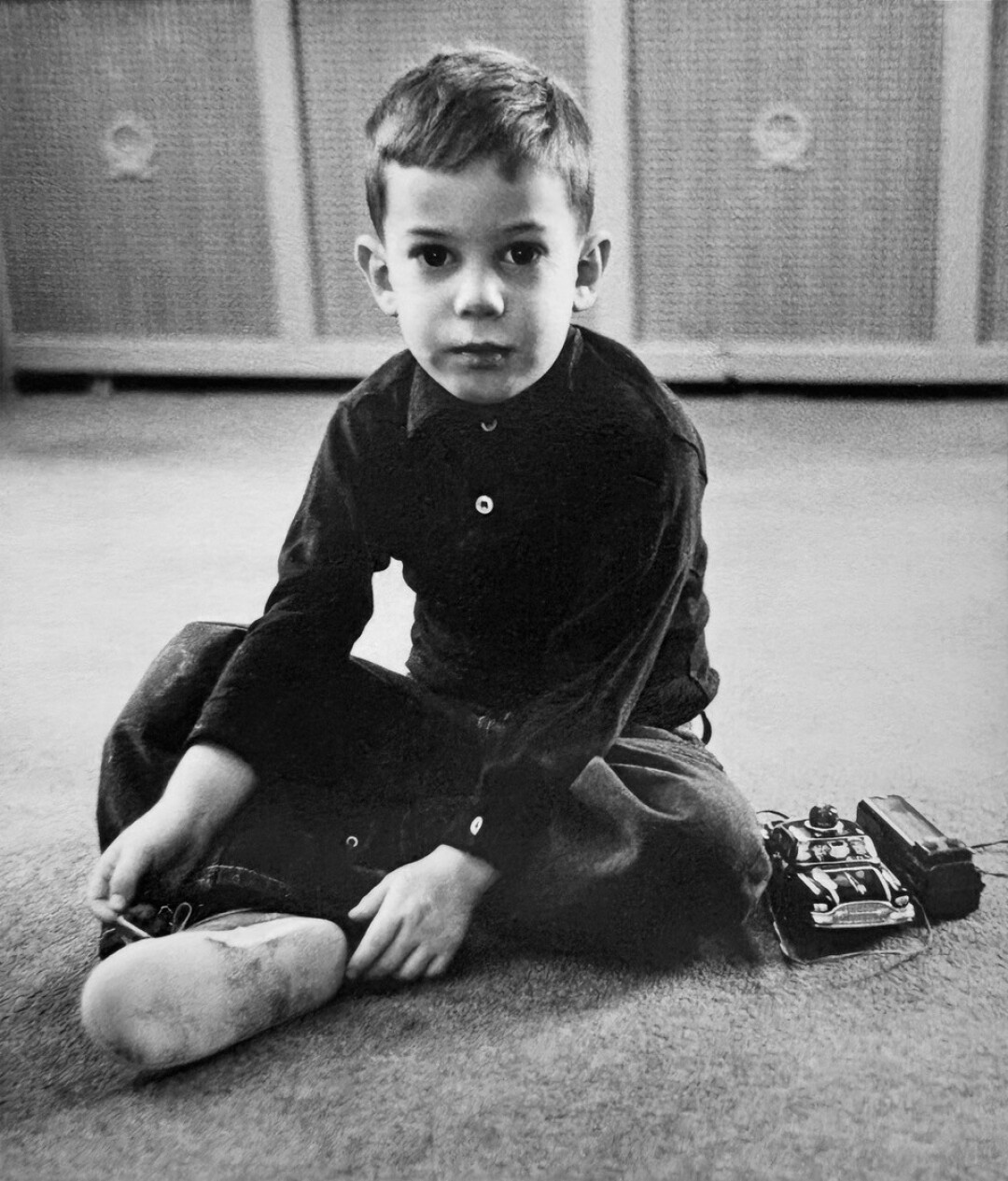
The word shtus, Stern says, is Yiddish for “idiocy.” And this small book of anecdotes from Stern’s life – stories that range from Stern’s experiences at Lake Nebegamon, to his experiences as a young man forging his way through school and sports, to his time spent as a foreign correspondent in places like Asia, Africa and the Middle East – recounts a number of the funnier moments from his life. But there is no lack of gravitas either.
“The most scared I’ve been while reporting was at an unsanctioned ‘checkpoint’ on a dirt road in Africa….This one was manned by teenage boys with AK-47s who were high on khat. It was touch-and-go for a while.”
Willy Stern, Shtus and Nonsense
As an emerging writer, Stern was not only writing but actively reading and leaning into authors like Red Smith, Vermont Royster and James Thurber.
“But I don’t want to overstate the point,” Stern cautions and adds, “I was mostly a wild kid intent on looking under every rock, and getting to the next continent.”
With the storytelling DNA encoded within him, an enduring love of writing and reading, and a sense of relentless curiosity, Stern continued to pursue writing opportunities as a journalist. But he saw journalism not only as an opportunity to write but also to travel.
“I didn’t really care about the writing, in retrospect, but thought that journalism was the quickest and easiest route for some like me – with no discernible skills – to wander the globe and have someone else pay for it. Fairly immature approach, in retrospect. But dang it was fun. No noble intentions whatsoever at that stage of life,” Stern humbly submits.
Stern’s talent and drive took him to places as far from his native Queens as possible, places like Tokyo, Johannesburg, Reykjavik, Baghdad and Kabul.
As a journalist, his articles and ground-breaking article series have exposed corruption and abuse, revealed the costs and conditions of war, and shined a light on some of the most important stories and people of our times. His work has been published in Forbes, The New York Times, The Wall Street Journal, The Chicago Tribune, The International Herald Tribune and Business Week, among others.
As a professor, he has taught at such distinguished institutions as Vanderbilt University, Carleton College and the University of Alaska.
Stern left his long-running, globe-spanning and award winning journalism and teaching careers to turn to book writing.
“I retired from the news biz. But I still had the desperate urge to write. I needed outlets. I wrote long letters to friends. But I needed more,” he says. And so, Canot du Nord, and now Shtus and Nonsense, was born.
“As a camper at Camp Nebagamon, I cleaned a skillet so well on the last night of a long duration Boundary Waters trip that the pan was hung from the ceiling in the Trip room, unusual, the rest of the summer, in my honor.”
Willy Stern, Shtus and Nonsense
As an autobiography, Shtus and Nonsense is, to borrow a phrase from Stern’s loving dedication to his children, a living literary example of sui generis. It is a small, delightful, raw, surprising and unclassifiable collection of scenes from the author’s life that jumps time and geographical distances but that is yet bound by a kind of thematic order.
In many of the anecdotes, Stern clearly pokes fun at himself, or, as he puts it, makes himself “the butt of the joke.” Yet the writing manages to touch upon the scope and depth of Stern’s life as a journalist, a foreign correspondent, a writer, a professor, a camper, a Green Berets supporter, a father and a man.
“In war zones, I’ve never had a shot fired at me in anger (other than inaccurate mortars, which nobody counts). I called my conflict reporting: “The wimp’s tour of war zones.’”
Willy Stern, Shtus and Nonsense
“Initially, I wrote down the vignettes so my two kids would know me, warts and all. And there are plenty of warts. The second stage was sending the screed to a few friends and family, in the hopes they might make some sense out of my dysfunctional, peripatetic life. Finally, we are onto this stage of sharing the stories with total strangers: My mission is to send a message that we ought never take ourselves too seriously, and ought focus on finding the joy and humor in the everyday,” Stern shares.
Shtus and Nonsense is a marvel of an autobiography (or book of any kind) that redefines what an autobiography can or should be.The book can be read straight through or picked up and read over time. It enlightens even as it entertains, and it gently draws us closer as it bravely uncovers some of the life-changing moments in Stern’s life. The book’s power is subtle and sweeping, and it runs deep like a stilled river.
What this reader finds most compelling about Shtus and Nonsense is its ability to ennoble and elevate some of the smaller moments in a life, the times when we thought no one was watching or we thought we were something other than full of purpose and full of a different kind of greatness. With his latest book, author Willy Stern has invited us to see “a world in a grain of sand,” as Blake suggests, and to also remember (and write about) those moments in the record of our life story.
“Many have memorized the famous 10 lines of MacBeth’s ‘Tomorrow and tomorrow and tomorrow’ soliloquy. I learned the next lines as well: ‘Enger Messenger – Thou comest to use they tongue; thy story quickly.’”
Willy Stern, Shtus and Nonsense
Shtus and Nonsense is available at Foxes and Fireflies Bookstore in Superior and Spinster Books in Ashland.
| Tweet |