




News & Articles
Browse all content by date.
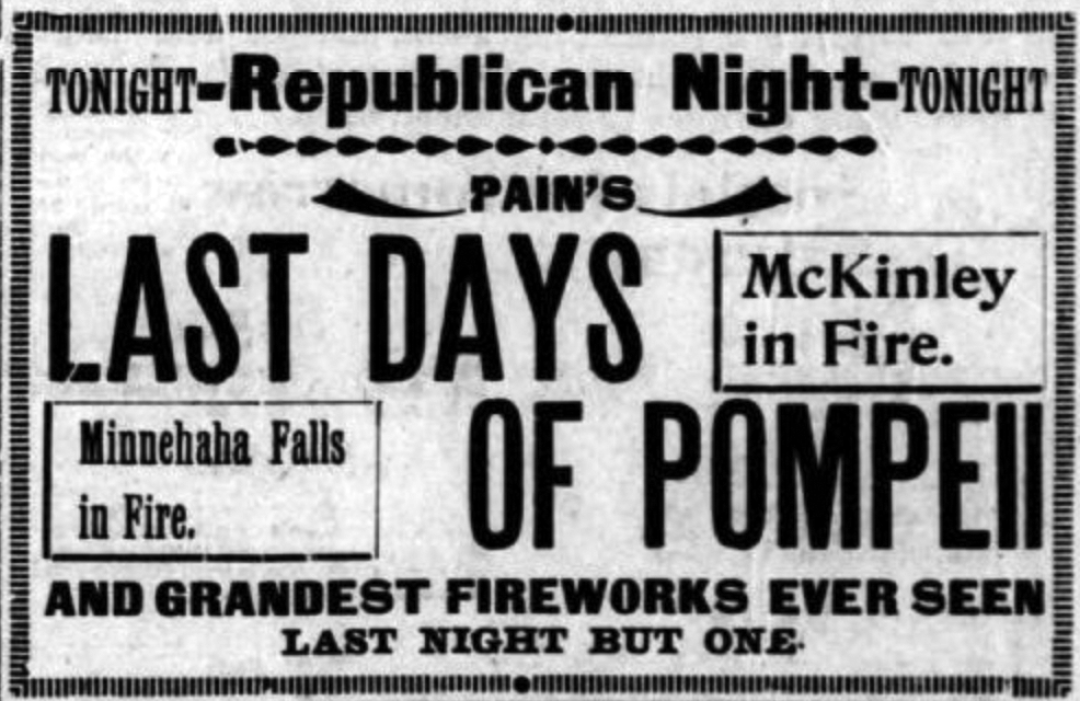 Duluth Herald, Sept. 19, 1896.
Duluth Herald
Sept. 17, 1888
WORK NOW BEGUN.
A Party of Engineers in the Employ of the Duluth & Winnipeg Road Has Been in the Field Over a Week
A party of engineers in the employ of the reorganized Duluth & Winnipeg railroad company have been at work for the past week on certain preliminary surveys from Cloquet northwestward. They were sent out by the new directors of the road to make a few examinations of the line before meeting of the reorganized company. As the line of the old Duluth & Winnipeg, as surveyed several years ago, does not touch Cloquet, going direct from Duluth several miles to the northward, these engineers were sent out to make connection between St. Paul & Duluth line at that place and the old surveyed line. The company knows all it wants in regard to the character of the country and the cost of building a road along their old line, and is perfectly satisfied with their knowledge. They know want to find out what the cost will be of connecting with this line at Cloquet. It is understood that their engineers have found a line up the St. Louis river feasible and inexpensive. By this means the tremendous expense of building down the divide into the city over the line as originally surveyed will be obviated, an expense which caused the abandonment of the project six years ago.
This gigantic project, the greatest which Duluth has looked upon for many years, seems now taking definite shape in the hands of men abundantly able to build the road and run it. Duluth is to be congratulated.
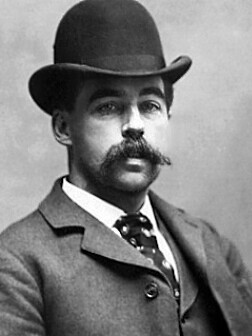 H. H. Holmes
Duluth Herald
Sept. 18, 1896
HOLMES
Ghastly Reminder of the Arch Fiend Found Near Evanston, Illinois.
A Forest Mound Found to Be
Full of Human Bones.
Place Is Only a Few Rods
From Where Holmes Lived.
Chicago – In the dense woods between North Evanston and Wisnette, a grave has been found full of human bones. The discovery was made by A. H. Parker, of Evanston, who, with his wife, has been making frequent excursions into the woods during the last two months. Mrs. Parker, some weeks ago, declared the place was a grave, and urged her husband to investigate it.
He at first refused, but finally consented, just to show his wife she knew nothing about graves. He dug long enough to turn up a few ribs and a thigh bone, and then called on police for help.
Yesterday afternoon several bones and a skull, supposed from its size to be that of a woman, were found. The investigation was stopped by darkness, but will be resumed today.
The spot is only a few rods from the house in which H. H. Holmes lived, and it is thought by the police that the bones may be those of some of his victims. The bones had evidently been interred for more than two years, and were apparently placed in the grave without a coffin and no clothing of any sort was found. From the size of the bones, it is thought they must be from several people.
(Editor’s note: Holmes, often described as America’s first serial killer, was hanged on May 7, 1896, for the murder of one man, but bragged to police he was responsible for 27 deaths.)
 Duluth Herald, Sept. 24, 1946.
Duluth Herald
Sept. 20, 1906
FOLLOWED BY HOODOO.
Steamer Frank H. Peavey Collides
With the Grand Haven.
The steamer Frank Peavey seems to be doomed to misfortune. About a month ago she went ashore in a heavy fog, near Castle Danger, on the north shore of Lake Superior, and has been in dry dock at Superior ever since, until she started down the lakes for Milwaukee last week. She arrived in Milwaukee Monday with a cargo of 6,903 tons of ore aboard, and was docking at the Illinois Steel company’s dock, when in some manner she collided with the big steamer Grand Haven, and while damage amounted to less than $100 on the Peavey, the Grand Haven suffered to considerable extent.D
 Duluth Herald, Sept. 23, 1936.
Duluth Herald
Sept. 21, 1916
NIGHT SCHOOL
WORK GROWS
Many Counties in This Part of State Will Open Classes.
St. Louis County Slow to Act; Women Will Take Up Project.
St. Louis county is said to be the most backward of any of the counties in Northeastern Minnesota in promoting rural night schools for aliens. Remarkable progress along this line is reported from various other counties, and a year of great expansion in this work is in prospect.
Such are the conditions found by Naturalization Inspector R. K. Doe in his travels through many counties. In speaking of the situation today, Mr. Doe said:
“William B. Stewart, superintendent of Beltrami county, reports that twelve night schools in rural districts will be formed at once and that county is bright for rapid growth of the work.
“Prof. E. A. Freeman, superintendent of Itasca county, reports that more than twenty rural night schools will be formed in his county.
“Mrs. David Lawrence, superintendent of Lake county, reports that there will be fully eight rural night schools.”
An effort is on foot to get the women of the state interested and working for this movement, and Mrs. Peter Oleson of Cloquet, president for this district of the Minnesota Federation of Women’s Clubs, will launch the project at the meetings now in session at Anoka. Mrs. Oleson is the wife of Supt. Oleson of Cloquet and has been in close touch with school matters for years, and it is believed that the movement will be given a great impetus through the action of the women’s clubs.
 Duluth Herald, Sept. 22, 1926.
Duluth Herald
Sept. 22, 1926
OPEN AIR PARTY BY THE HERALD FOR THE DEMPSEY-TUNNEY FIGHT
All Duluth is invited to attend the open air party which The Herald will give tomorrow night in connection with the big Dempsey-Tunney fight, which will be staged at Philadelphia.
The Herald has arranged for a special direct wire from the ringside. Blow by blow and round by round. Almost as fast as it happens, will be announced to the crowds in front of the Herald building in Courthouse square. Art Olson, well known baseball umpire, will announce through huge amplifiers the entire action in the ring and snappy entertainment is promised from the time the main bout starts about 7 o’clock Duluth time, until the winner is declared.
All those unable to be downtown tomorrow night are invited to call The Herald by telephone as a special service has been arranged to give Duluthians the immediate results of the big fight.
Among the entrainment features, aside from the returns of the prize gith, will be music furnished by A. J. Lindgren’s Victrola shop.
 Duluth Herald, Sept. 22, 1926.
Duluth Herald
Sept. 23, 1936
POINT TO OPEN
NEW CLUBHOUSE
ON FRIDAY NIGHT
Library Branch Also to Be Dedicated at Ceremony.
The official opening of the newly remodeled Park Point Community clubhouse will be held at 8 p.m. Friday. Mayor S. F. Snively will give the address of welcome and the program will include dedication of the Park Point branch of the Duluth public library by Mrs. Margaret Culkin Banning, chairman of the library board, and Judge Bert Feler.
Miss Florence H. Wilkinson, who will be in charge of the branch, will receive the library with the following members of the Park Point Parent-Teacher association: Mrs. Mary Pangborn, Mrs. Walace W. Hankins and Miss Maxine Cranmer.
Presentation of the flag to the clubhouse will be made be Mrs. J. R. McGiffert, and S. Clark Dick will give a brief history of the club since its origin. George H. Crosby will speak on the work of the Park Point Improvement association and moving pictures of special interest will be shown.
An orchestra will play during the evening. George O. Smith, president, wil preside and has issued an invitation to all members and friends of the club.
 Duluth Herald, Sept. 24, 1946.
Duluth Herald
Sept. 24, 1946
Sweden’s Noted Comedian to appear at Denfeld
Sweden’s noted comedian of stage and screen, Edvard Person, will appear in a program of Swedish folk songs and folk humor at 8 p.m. Oct. 12 in the Denfeld high school auditorium.
Often compared to Charles Laughton, Mr. Person’s appearance here is under sponsorship of the Swedish-America league. It is his first tour of the United Sates.
Accompanying the comedian on the piano will be Alvar Kraft, with Gerhard Rooth, New York, editor of the Swedish newspaper Nordstjernan, acting as master of ceremonies. Included in the program is a half-hour Swedish film.
Program committee members, announced today by Mrs. Bertha Anderson, league secretary, are Mrs. Anna Sjogren, Nels J. Lindahl, Erland Erlander, Mrs. Teekla Liljedahl, G. A. Gustafson and Mrs. Anderson.
Tickets may be purchased from any member of the league.
 Duluth Herald, Sept. 25, 1956.
Duluth Herald
Sept. 25, 1956
Reserve Tells Taconite Plant
Expansion Plans
Firm Asks Permit To Up Dumping of Waste Materials
Expansion plans of Reserve Mining Co.’s Silver Bay taconite beneficiation plant were disclosed this morning as the firm went before the state water pollution control commission officials for a permit to increase dumping of waste materials into Lake Superior.
William M. Kelley, Reserve president told commission officials in a St. Louis county courthouse hearing that the permit to increase dumping is sought in order “that plans may be made and decisions arrived at on the question o f possible expansion of these Silver Bay plants to an eventual capacity of up to 10,000,000 tons per year.”
Reserve was granted a permit to discharge waste into the lake near its plant at the rate of 130,000 gallons per minute on Dec. 27, 1947. Sought now is permission to increase the rate to 260,000 gallons per minute.
The wastes consist of fine, sand-like particles of rock suspended in water. Reserve officials explained that the wastes are carried into the lake in a “heavy density current” which because it is heavier than clear water, flows tot eh bottom of the lake, where the wastes are deposited.
Under authority of the 1947 permit, Kelley said, Reserve has built and put into operation a plant rated at a capacity of 3,70,000 tons of concentrate annually.
Kelley declared: “It is generally accepted that if Minnesota is to maintain its position as the leading producer of iron ore for the nation’s steel industry it must have plants built to develop capacity for producing taconite concentrates at the rate of approximately 40,000,000 tons per year, to replace our diminishing supplies of presently usable ores.
“An important element in the effort to reach that goal would be the expansion of the Reserve taconite plant at Silver Bay to a capacity of 10,000,000 tons per year. We believe everybody in Minnesota recognizes the importance to the economy of the state, and particularly to the northeastern portion of the state, of reaching that goal.”
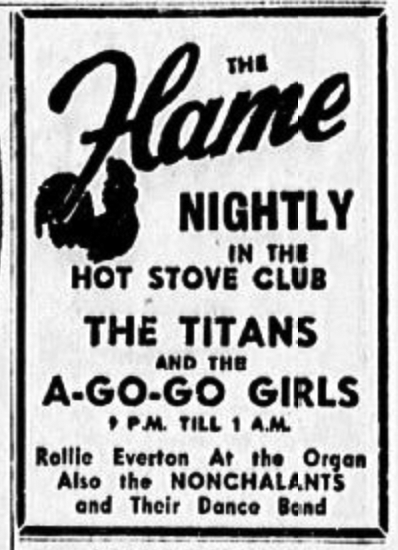 Duluth Herald, Sept. 26, 1966.
Duluth Herald
Sept. 26, 1966
Gustafson, Lueck
Players of the Week
Dave Lueck of Duluth Cayhedral and Gordy Gustafson of Morgan Park shared the honors this noon at the Duluth Quarterback Club as the high school Back and Lineman-of-the-Week.
Gustafson led a defensive assault that resulted in seven East fumbles in the Park’s 7-6 victory last Friday. He scored the Wildcats’ only touchdown with an alert recovery of a teammate’s fumble in the end zone.
“I was real pleased with Gordy’s play,” said coach Dick Forbort. “After all, we would not have scored without his effort, as it turned out.”
Cathedral was a veritable machine behind the charges of Lueck. He accounted for 166 yards on the ground to give him over 300 yards gained in the last two games. He was hobbled by injuries
In the first two games and was not playing at full strength.
Tom Addams, the Hilltopper coach, had completed praise for his senior fullback. “Dave is an outstanding performer, both offensively and defensively, but he seemed to outdo himself against Central. If any one deserves an honor it has to be Dave for his play in that game.”
Lueck scored two touchdowns on runs of four and 44 yards.

| Tweet |