




News & Articles
Browse all content by date.
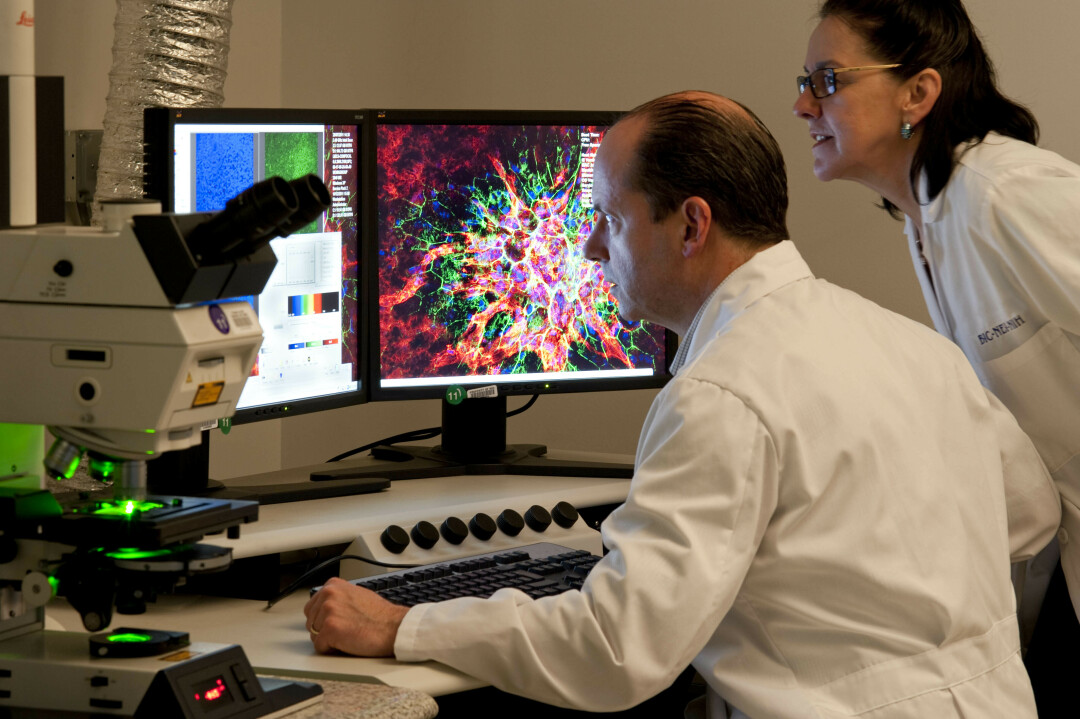 NIH photo.
The National Institutes of Health (NIH) has been described as the crown jewel of American biomedical science. NIH has been in existence for nearly a century and provides grants to investigators to do their science.
What is the NIH and how does it decide which grants should be funded?
First a little context. The NIH is divided into 27 different institutes and centers. One of these, the National Institute of Allergies and Infectious Diseases, is well known for its pioneering work during the 1980s’ AIDS crisis and the recent COVID pandemic.
Each institute or center has a research area, such as heart disease and cancer. The institutes and centers fund grants based on expert reviews performed by independent scientists.
In 2020 the NIH funded $31 billion of biomedical research, according to the World Health Organization. This funding supported more than 300,00 investigators in universities, medical schools and research institutes.
More than 80% of basic biomedical research funding comes from the federal government. Private industry, e.g. pharmaceutical companies, typically pay for clinical trials where new drugs are tested in patients. These companies do not pay for the basic research that discovered the new treatments.
An article in the Proceedings of the National Academy of Science found that 392 out of 394 new drugs approved by the Food and Drug Administration were based on research supported public funds. To state this another way 99% of new drugs were discovered by government-funded research.
Given this success how does the NIH determine which research grants should be funded? I can describe the grant review process based on my experience writing dozens of grants and serving for more than 25 years on NIH review panels.
An investigator prepares a grant and submits this to the NIH. Preparing a grant may take months or even years. Grant proposals usually contain data that has never been published, to show that the grant has innovation.
Expert scientific reviewers meet three times a year as a review panel to evaluate 70 to 100 grants. An expert reviewer usually takes four to eight hours to examine an individual grant and write the critique (review of the grant). Every grant has three reviewers assigned and each provides a score for the entire grant.
Usually there are 15 to 20 expert reviewers in the panel. This group of experts reviews all of the 70 to 100 grants.
For some grants the decisions are easy – the proposal has little merit and receives poor scores. For other grants the review may be an arduous process as the experts debate the merits of that particular grant. These reviews are based on the four to eight hours of preparation done in advance of the meeting.
After the discussion all the experts on the review panel, not just the three reviewers, vote a score. What happens with these scores?
A specific NIH institute receives the scores and the written critiques. Most funding decisions are based on the scores submitted by the review panel. This means that only those grants with the best scores will be funded.
In the past decades the rigorous scientific review and debate have translated into the best science receiving your tax dollars for research.
Has this research improved the lives of people? YES!
Specific examples illustrate the millions of lives saved by basic studies funded by NIH. This research provided the foundation for the creation of lifesaving drugs and technologies.
Among these are the antiretroviral drugs used to treat HIV infections. As a result of these discoveries, most HIV-infected patients who receive treatment do not progress to AIDS.
Other drugs treat muscular dystrophy or autoimmune disorders. More than 35 million people take statins, cholesterollowering drugs such Lipitor, so probably you or someone you know takes this type of drug on a daily basis.
More important than reducing cholesterol, statins decrease mortality. Studies with more than 85,000 patients showed a significant decrease in mortality.
Why doesn’t the public know about the funding source that created these lifesaving drugs?
NIH primarily funds basic biomedical research – think studies done with chemicals on a lab bench or animals. This type of work rarely receives coverage in the lay press.
Clinical trials, where patients are given a new drug and the outcomes compared to current drugs, are typically funded by pharmaceutical companies. Basic research laid the foundation for the subsequent clinical trial, but this scientific underpinning is rarely mentioned. The news story is that the new drug works, not how it was discovered.
Does every grant funded by the NIH lead to a new drug? While that would be wonderful, it is estimated that for every 100 new drugs evaluated by researchers, only one actually makes it to market. Despite this ratio, success has resulted in millions of lives saved.
NIH funding decisions are based on rigorous scientific review by panels of experts. This review process helps maintain U.S. exceptionalism in research.
Daniel Remick, M.D. is Professor Emeritus of Pathology & Laboratory Medicine at the Boston University Chobanian and Avedisian School of Medicine and former Chair of that Department. He was a Professor of Pathology and Assistant Dean of Admissions at the University of Michigan from 1986 to 2006. His research has been supported by grants from the NIH for more than three decades. Dr. Remick grew up in Duluth and graduated from Central High school in 1971.
Author Info
Brian Martucci
Brian Martucci is a Minneapolis-based writer covering energy, the environment and commercial real estate. In addition to the Reformer, his work appears in Utility Dive, Finance & Commerce, MinnPost and other local and national publications.
| Tweet |