




News & Articles
Browse all content by date.
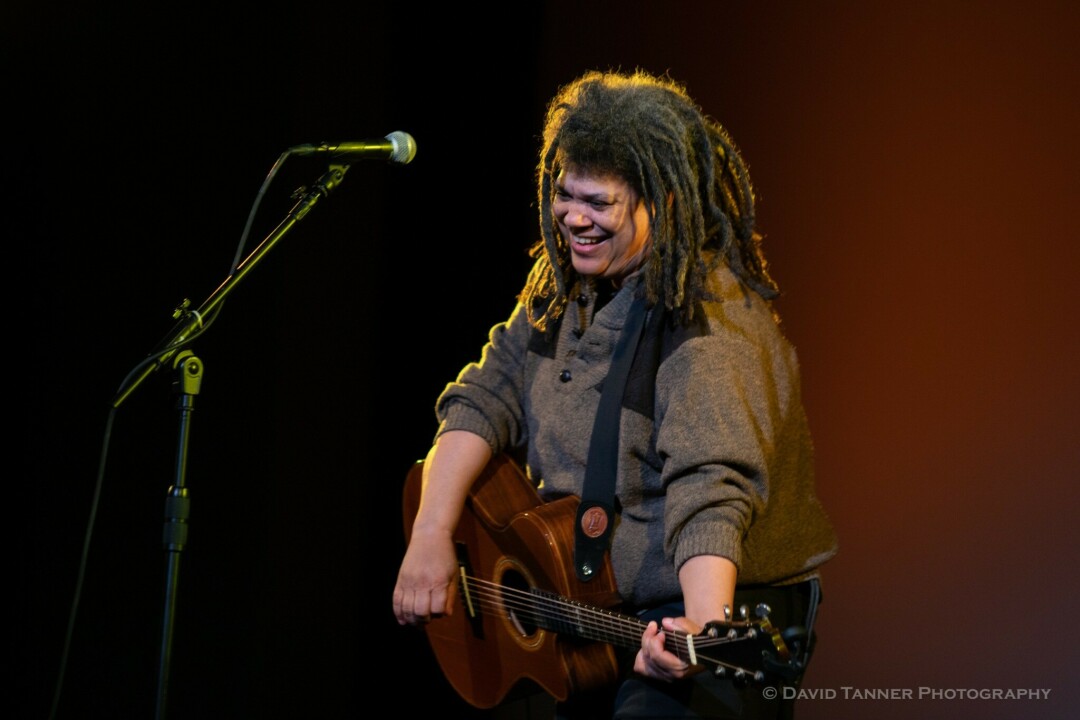
Mary Cutrufello will perform a special solo concert on Saturday, May 9, 9 p.m. at the Alhambra Theatre. I was able to catch up with her a couple of weeks ago on my Stars Over the Prairie Radio show on KDAL610AM-103.9FM. This is an edited transcription of our conversation.
Paul Metsa: Mary Cutrufello, thanks for joining us on Stars Over the Prairie. You are the only rock and roller I know that graduated from Yale University. Tell us how that all started.
Mary Cutrufello: I grew up in Connecticut. listened to classic rock and Broadway show tunes. The rock and roll I found, the classic yeah, the show tunes were my parents’ record collection. And I went to Yale because, well, because it was a good school and they let me in. But also my mom was like, you’re not going to Berkeley. And I’m like, what, ma? She’s like, no. It’s like you’re going to get a liberal arts education. And I said, all right. And I mean, she wasn’t wrong, but I was wasn’t pleased about it at the time.So I graduated Yale in 1991 with a degree in American Studies. I studied a lot about what I called 20th century transportation history, but it was basically trains and highways, which, you know, if you think about being an Americana songwriter or a Roots writer or whatever, it was perfect prep for that.
PM: How did you end up in Texas?
MC: And after that, I moved down to Texas to do like self-directed grad school, you know, just kind of take all the stuff that I’d learn and go somewhere I’d never been and see if it all made sense from that vantage point. And I spent the ‘90s down there and had a lot of good success, wrote some songs, got deep into country music. That was why I went to Texas, because it seemed like everything was kind of emanating out of there that I was interested in. And spent 10 years – basically the decade of the ‘90s – down there and learned how to do what you hear now, pretty much.
PM: So tell us about starting to play around there. Who were you listening to? And what really kind of gave you the spark?
MC: Well, my senior year in college, I found Exit Zero by Steve Earle, Hillbilly Rock by Marty Stuart, and Buenas Noches from a Lonely Room by Dwight Yoakam. And granted, this is, you know, this is Connecticut. I didn’t have a whole lot to go on, you know, even finding those three records. But I started reading, you know, who was writing the cover songs and whatever. And then armed with those three records, a pickup truck and a brand new Telecaster, I drove down to Texas and I said, hey, I’m here. Now what? And one of the first things I did was go to the Broken Spoke. And in those days, it was like Alvin Crow was playing.
PM: How has Austin changed since then?
MC: It’s completely different from what it is today. There’s very little of it of like early ‘90s Austin that’s left, to say nothing of ‘60s and ‘70s Austin. But at that time. I would call it the second wave of Austin being a cultural capital. So the first wave being like Kinky Friedman and Willie and those guys. But this was like Dale Watson. This was The Wagoneers. This was Kelly Willis. This was Two Hoots and a Holler.
PM: How did you start playing with Jimmie Dale Gilmore?
MC: That happened because my manager at the time knew his manager at the time, which is how a lot of these sorts of things happen. But it also happened that Jimmy liked what I was doing and I had just bought a baritone guitar. And he had made a record called Braver Newer World. Yeah. It was on Electra and they were giving it a big push. T-Bone Burnett produced that record out in LA, I think. I didn’t play on the record, but they were looking for a band because they had like, you know, Mark Ribot, Greg Leisz and people that weren’t going to tour. And yeah, the word had kind of started to circulate that I had this baritone guitar and there’s a bunch of baritone on that record. And that was kind of, I think, the thing that turned the key that turned the lock.
And it was so much fun. I still love Jimmie. He was up here last year and it was great to see him. And I learned so much about being in a band that was doing more than playing little tiny places, you know, just what it’s like to be on a tour bus, what it’s like to, you know, to work with back-line, which in those days was, you know, master volume Twin Reverbs that were as likely to catch fire as make noise.
PM: So how long did you play with Jimmie Dale Gilmore?
MC: Like three or four runs that stretched over probably a year and a half in the mid-90s.
PM: Tell us about Jimmie’s buddies in the Flatlanders – Joe Ely and Butch Hancock.
MC: At least some of them I could say on the radio, but I didn’t know Butch super well because by that point he had already moved out to Terlingua, which is a long way from Austin. I mean, maybe seven or eight hours. And he didn’t come to town much. He would come in once in a while and play a couple of songs. Great songwriter and seemed like a super nice dude.
Joe Ely was hip to what I was doing from the get-go and was always really supportive.
Jesse “Guitar” Taylor was also supportive of what I was doing on the Telecaster, which meant a lot, you know, it’s trying to learn a new style. And, you know, you just go out there and you put it out and you see what comes back. And it’s gratifying when anybody says, I dig it.
But when somebody of that stature that you dig is like, no, no, no, you’re doing it right. I keep going. That meant a lot to me. And, you know, Ely was just in those days, man, he was just, just a ball of fire. He was hard to keep up with.
PM: Tell us about your major label deal with Mercury Records.
MC: I was working with management out of Nashville and after a couple of years of doing what we do, the bobber went down and then all of a sudden in the summer of ‘97, labels started coming around. We had a little bit of a bidding war, you know, the whole thing. And I signed with Mercury because I believed in the team. And we signed out of New York.
But it was a rock deal. It wasn’t a Nashville deal. So, and I had started to write more of the rock era kind of songs. And so it made sense to me coming from where I come from. A lot of people that only knew me when I showed up in Texas were like, what are you doing? And I was like, I don’t know, doing the thing that I grew up with, you know, it’s always been in my head the whole time.
PM: So how did it all work out?
MC: Mercury was a great experience, but unfortunately it was, it came along right about the same time as the great merger of Polygram and Seagram’s. And where was the big five went to the big four or the big four went to the big three. A lot of us had, you know, aborted experiences.
They owed me the advance for the second record, which they were nice enough to give half of it to me in December and half of it in January. So like to split up my tax burden. And they also paid for me to go out on the road in the summer of ‘99 with the Alllman Brothers. You know, it was the first year of Derek Trucks and the next to last year of Dickey Betts.
PM: So you went from the Tops of the Pops, played on the Tonight Show, two appearances on Austin City Limits, toured all 50 states and in Europe, then lost the record deal, and now you are living as a vibrant independent musician in the Twin Cities. How’s life?
MC: It was humbling. You know, I moved up here. I put a good band together. And you know, but it was, yeah, it was starting all over and in a new place. I mean, if I had stayed in Texas, it might not have been the same. But yeah, it was really starting over.
And you know, I had a lot of skills, some of which were useful for booking little gigs and some of which kind of weren’t, but I still got them. Like I said, I got to keep everything from those days, from those Mercury days. And you know, I’ve just kind of stayed true to myself, wrote more songs, play them where, you know, where people will have me and you know, always willing to get back on the horse, go out and stay in hotel rooms again.
And you know, I’ve never really given up on things, but I just kind of, I keep plugging and keep making music, putting out music and looking forward to, you know, any new gig.
I haven’t been to Duluth in forever, so I’m looking forward to that gig.
| Tweet |