




News & Articles
Browse all content by date.
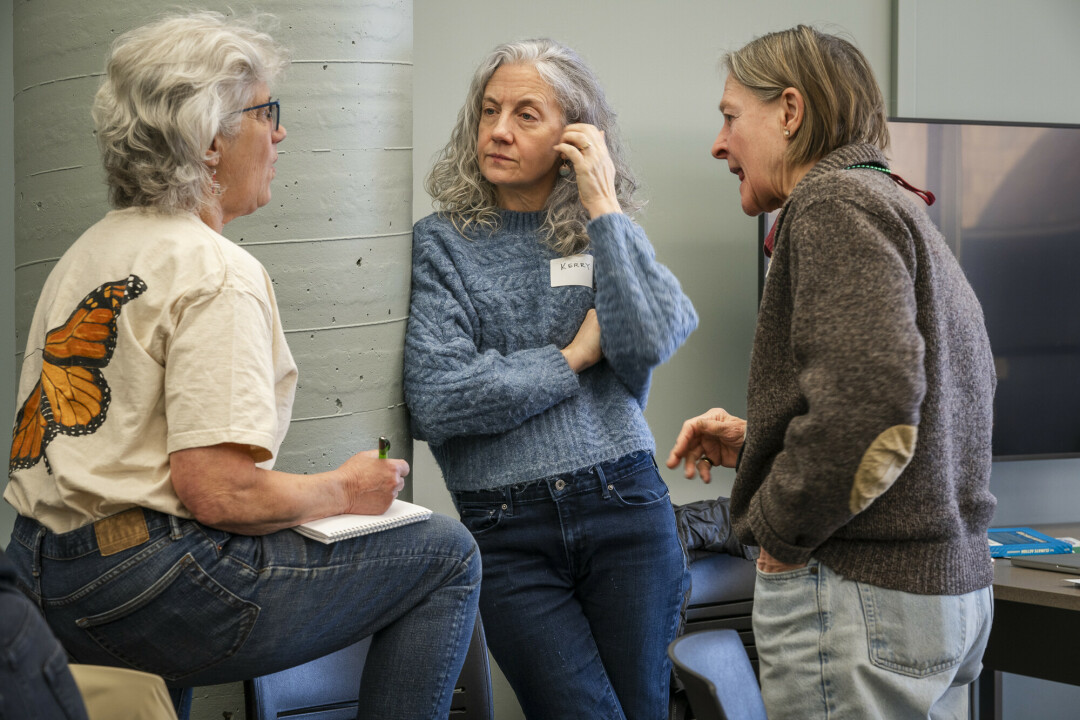
At a previous Community Climate Leaders gathering.
A statewide effort to turn climate concern into community action is coming to Duluth.
The Community Climate Leaders Program, organized through University of Minnesota Extension, will host its first Duluth-area cohort beginning March 30.
“We did try to host it in the fall of 2025 but just for scheduling reasons, it didn’t work out,” said instructor Seth Spencer, an Extension Educator with the University of Minnesota Climate Adaptation Partnership. “So this will be the first cohort in the Duluth area.”
The program has already been offered in the Twin Cities metro area, where colleague Christy Marsden has hosted three cohorts. Additional sessions are scheduled with her this spring in Northfield and Pine River.
The Community Climate Leaders Program is designed for residents who are worried about climate change but unsure how to respond at the local level.
“You may see climate change as this big problem that is impacting the whole world, but not sure how to take that individual step,” Seth said. “Our goal is to really localize climate change — both the impacts and what adaptation looks like — and ask: How do we actually do something about it within our homes, our property and our neighborhood?”
The course draws on Minnesota-focused, research-based information to help participants understand changes already underway — from reduced snowpack to rising summer temperatures — and to identify practical responses that build community resilience.
Organizers say the program is open to anyone. Past participants have included retirees, business professionals and university students. High school students are also welcome, Seth said, noting that while a $200 registration fee applies, scholarship codes are available on the program website.
The program begins with the first of five online modules on March 30, followed by four in-person sessions from 5:30-8 pm Mondays – April 6 and 20, May 4 and 18 – at the Duluth Folk School.
While climate policy debates continue nationally, Seth said Minnesotans have shown a willingness to rely on state-level research and local initiative.
“It’s a challenging time,” he acknowledged. “But Minnesotans are stepping up to make sure our communities are prepared and resilient when we have these extreme weather impacts.”
The program emphasizes both science and storytelling. Sessions include small-group discussions and project development workshops. Participants are asked to develop a “capstone” project they can implement locally.
Those projects have varied widely in other communities. Some have approached county boards about developing climate action or resilience plans. Others have worked to establish community orchards, expand green space, support school-based solar initiatives or improve pedestrian and bicycle safety. Still others have helped launch neighborhood gardens focused on food access and food sovereignty.
“There aren’t traditional class assignments,” Seth said. “But we do want people to leave with something concrete they’re ready to try in their community.”
Participants also continue collaborating after the formal sessions end, creating an informal network for brainstorming and support.
Now about a year and a half into the broader project, organizers say they are already seeing long-term impacts. In some counties, former participants have presented to local officials, prompting discussions about formal climate planning. In other neighborhoods, conversations have sparked new gardens, orchards and infrastructure improvements.
Seth expects Duluth to be fertile ground for similar efforts.
“I grew up in Duluth, and I’ve seen both the climate impacts on the community and how engaged people are,” he said. “People here really love the ways we connect with the natural world.”
He believes that connection can translate into action — and that action can spread.
“There’s a ripple effect,” he said. “Each individual touches someone else.”
For more information or to register for the Duluth cohort, visit climate.umn.edu/community-climate-leaders.

| Tweet |