




News & Articles
Browse all content by date.
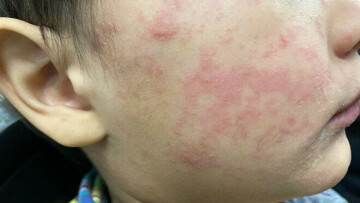
In January 2026 South Carolina declared a measles outbreak affecting more than 750 people. Of those who fell ill, more than 700 were not fully vaccinated.
A 2025 outbreak in Texas infected more than 700 people, killing two children.
How can this disease, eliminated by vaccines in the U.S., surge across the country?
Measles: Initial symptoms Patients develop symptoms about 10 to 14 days after exposure to an infected person. These symptoms include a high fever spiking up to 104 degrees F.
Patients also have the three Cs – cough, coryza (runny nose) and conjunctivitis (red, watery eyes). The typical rash appears on the face, which then spreads to the trunk and extremities.
Measles complications While most only think about the rash, the measles systemic infection may injure many organs. Up to 30% of patients develop complications such as diarrhea, ear infections and pneumonia, some of which develop more than a month after the initial infection. Severe brain damage may also occur. Children (less than 5 years old), pregnant women and immunocompromised patients are more likely to suffer complications. Most important: measles kills about 1 out of every 1000 infected children.
Measles transmission: Measles spreads through the air, holding the unenviable status of being the most transmissible infectious disease. Virus containing droplets may linger for up to two hours after an infected person leaves a room.
Measles is so transmissible that if 10 unvaccinated people enter that room, nine will become infected.
An outbreak is defined as three cases in a specific area, such as a school or detention center. Because of the transmissibility and the length of time between exposure and infection, schools were closed for 21 days during the Texas outbreak, severely disrupting learning.
Besides quarantines, what other measures can effectively stop a measles outbreak?
Measles vaccine: The measles virus was isolated in 1954 from an 11-year-old child and modified in a lab to create a less virulent strain. A vaccine trial in children in New York City and Nigeria used this modified virus.
These trials included a placebo group, where children received injections that did not contain any virus. This trial was done in children since they are the most susceptible to measles.
In the 1950s, many adults already had measles and developed immunity to the virus. Because of the dangers of measles, parents were eager to enroll their children in these trials.
The first measles vaccine trial showed remarkable success: 100% of fully vaccinated children did not develop measles. Additional trials in multiple countries demonstrated that measles vaccines substantially reduced the number of infections.
In vaccinated children who did become infected the symptoms were much less severe compared to unvaccinated children.
It should be noted that the current measles vaccine includes mumps and rubella, the MMR vaccine. The mumps and rubella vaccines included a control group and both showed efficacy and safety.
Measles resurgence prior to 1963 and widespread measles vaccination campaigns: Three to four million cases of measles occurred annually in the U.S., resulting in 400-500 deaths. By 2000 there were still more than 500,000 worldwide cases, but the disease was declared eradicated in the U.S.
However, a resurgence of measles is now occurring, with 2,144 confirmed cases, including 2 deaths, in 2025.
What could account for this reemergence of this once eradicated disease?
Vaccine hesitancy: Two reasons may explain lack of acceptance of vaccines. First, people became complacent about the disease. They did not see it in the news or their community. The memory of measles, among older individuals, was that of a relatively mild rash.
Second, there were unfounded fears the measles vaccine caused autism.
Measles no link to autism:” An unscrupulous English doctor, Andrew Wakefield, published a paper claiming a link between the measles vaccine and autism. This paper was retracted and he lost his medical license.
Wakefield was paid by lawyers so that claims could be filed against the vaccine manufacturers. He received millions of dollars for selling kits to diagnose autism (kits that did not work).
Numerous studies clearly demonstrated that no link exists between the measles vaccine (in the MMR vaccine) and developing autism. A recent study from Denmark, where there is near universal vaccination, evaluated 650,000 children and found no link between the MMR vaccine and subsequent development of autism.
Conclusion: Measles, the most transmissible infectious disease, is far more than a simple rash causing severe complications and even death.
The measles vaccine, currently combined in the MMR vaccine, is highly effective and very safe. You can protect yourself, your loved ones and your community with this vaccine.
| Tweet |